
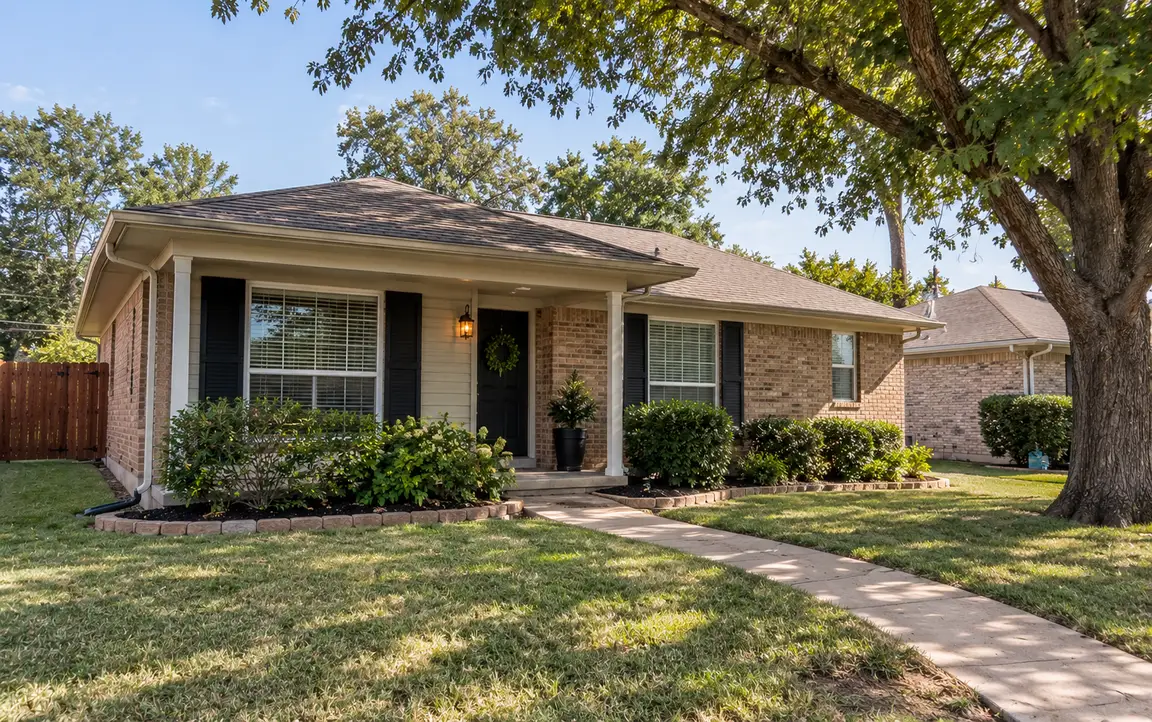
Owning rental property in Fort Worth sounds like a smart investment — until the numbers stop making sense. If your monthly income barely covers your expenses, or you find yourself paying for repairs out of pocket more often than expected, it may be time to take a hard look at whether you should sell an underperforming rental property before the losses grow any further.
What Are the Most Common Signs a Rental Property Is Losing Money?
Rental underperformance can be easy to miss when income and expenses are reviewed separately rather than as a complete picture. The warning signs are often gradual, which makes them easy to overlook month after month.
Is Your Vacancy Rate Higher Than the Local Average?
Vacancy rate is one of the clearest indicators that something is off. It measures how often your unit sits empty compared to how often it should be rented. Rather than relying on a universal Fort Worth vacancy threshold, compare your property’s vacancy against genuinely comparable rentals in the same submarket and property type.
Every month without a tenant is a month where you are covering the mortgage, insurance, and property taxes with no income to offset those costs. A persistently high vacancy rate is rarely just bad luck. It often points to pricing that is too high for the area, a property condition that drives tenants away, or a location that has lost its appeal to renters.
Are Maintenance Costs Eating Into Your Profit?
Older properties in Fort Worth, Denton and Arlington often come with aging plumbing, older HVAC systems, and roofing that needs more frequent attention. When repair costs consistently eat into your rental income, you are not building wealth — you are maintaining a property at a loss.
Watch for these recurring expenses:
- HVAC repairs or full replacements
- Plumbing leaks and water damage restoration
- Roof patching or replacement
- Appliance failures that fall under landlord responsibility
- Foundation issues common to North Texas clay soil
Is Tenant Turnover a Constant Problem?
High turnover creates a compounding problem. Every time a tenant leaves, you face cleaning costs, possible repairs, advertising expenses, and lost rent during the gap. A property that cycles through tenants every six to twelve months will rarely perform well financially, even if each individual lease looks fine on paper.
How Do You Calculate Whether Your Rental Is Actually Profitable?
Feeling like your property is underperforming is one thing. Knowing it for certain requires a straightforward look at the actual numbers.
What Is the Difference Between Rental Income and Real Expenses?
The most basic way to measure rental performance is to compare total income against total monthly expenses. Start by adding up everything the property costs you each month:
- Mortgage principal and interest
- Property taxes (divided by twelve)
- Landlord insurance
- Property management fees, if applicable
- Average monthly maintenance and repair costs
- HOA fees, if applicable
- Vacancy allowance, typically five to ten percent of gross rent
Subtract that total from your gross monthly rent. If the result is negative, you have a negative cash flow rental. If it is barely positive, a single unexpected repair can wipe out that thin margin entirely.
How Do You Run a Basic Cap Rate Calculation?
The cap rate, or capitalization rate, gives you a broader view of your property’s performance as an investment. The formula is straightforward:
Cap Rate = Net Operating Income ÷ Current Property Value
Net Operating Income (NOI) is your annual rental income minus all operating expenses, not counting your mortgage. If your Fort Worth rental brings in $15,000 a year in rent but costs $10,000 a year to operate, your NOI is $5,000. If the property is currently worth $200,000, your cap rate is 2.5 percent.
In Fort Worth and the broader North Texas market, most investors look for cap rates between five and eight percent. A cap rate below four percent suggests the property is not earning enough relative to what it is worth, and you may be better off redirecting that capital elsewhere.
What Are Your Numbers Really Telling You?
If your cap rate is low and your monthly cash flow is negative, the investment is not working the way it should. Some landlords hold on hoping the situation will improve — but hope is not a financial strategy. At some point, the numbers speak for themselves.
When Does a Bad Month Turn Into a Bigger Problem?
One rough month does not define a rental property. But there is a meaningful difference between a temporary dip and a pattern that signals something is structurally wrong.
How Do You Recognize a Pattern Versus a One-Time Exception?
A bad month might look like an unexpected repair bill right after a tenant renewed their lease. A deeper problem looks like three months of vacancy, followed by a late-paying tenant, followed by another repair, followed by another vacancy. When these events stack on top of each other, the cumulative drain on your finances becomes very hard to recover from.
What Hidden Costs Do Landlords Most Often Miss?
Beyond the obvious monthly expenses, some costs never appear on a regular statement but still affect your bottom line. Property depreciation over time can reduce the appeal of your rental compared to newer units. Shifts in the Fort Worth rental market — such as new apartment complexes opening nearby — can push rents down and vacancy up in older properties.
There are also the personal costs: the time spent managing tenant issues, coordinating repairs, and handling disputes. Those hours have real value, and most landlords never account for them when measuring whether a property is truly profitable.
When Does Selling Become the Smarter Move?
At some point, the question shifts from how to fix the property to whether fixing it even makes financial sense. If the cost of needed repairs approaches or exceeds the likely increase in rental income or sale value, putting more money into the property may not be the right path forward.

Frequently Asked Questions
How do I know if my rental property is underperforming?
A rental property is likely underperforming when your monthly expenses regularly exceed your rental income, your unit sits vacant for extended periods, or maintenance costs consume a large portion of what you earn. Running a basic cap rate calculation and comparing it to Fort Worth market averages can confirm whether your property is generating the return it should.
What does negative cash flow mean for a rental property?
Negative cash flow means your rental expenses are higher than your rental income each month — factoring in your mortgage, taxes, insurance, repairs, and any management fees. When you consistently spend more than you earn on a property, it is working against your financial goals rather than supporting them.
Can I sell my rental property in Fort Worth without making repairs first?
Selling a rental property without making repairs is possible when you work with a cash buyer who purchases homes in as-is condition. We assess the property as it stands and make an offer based on its current state. This approach allows landlords to exit without putting additional money into a property they are ready to leave behind.